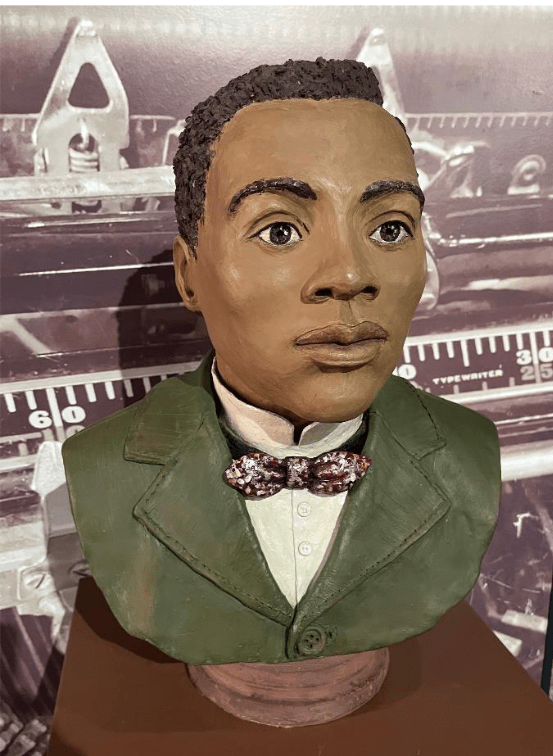
Throughout the Mafeking Siege, Sol Plaatje served as an interpreter for the court. One of the most significant records of the experiences of the black South Africans during the Anglo-Boer War is said to be his journal from that time. He was a founder member of the South African Native National Congress in 1912, which subsequently changed its name to the African National Congress (ANC), and he rose to the position of organization head in the 1930s.
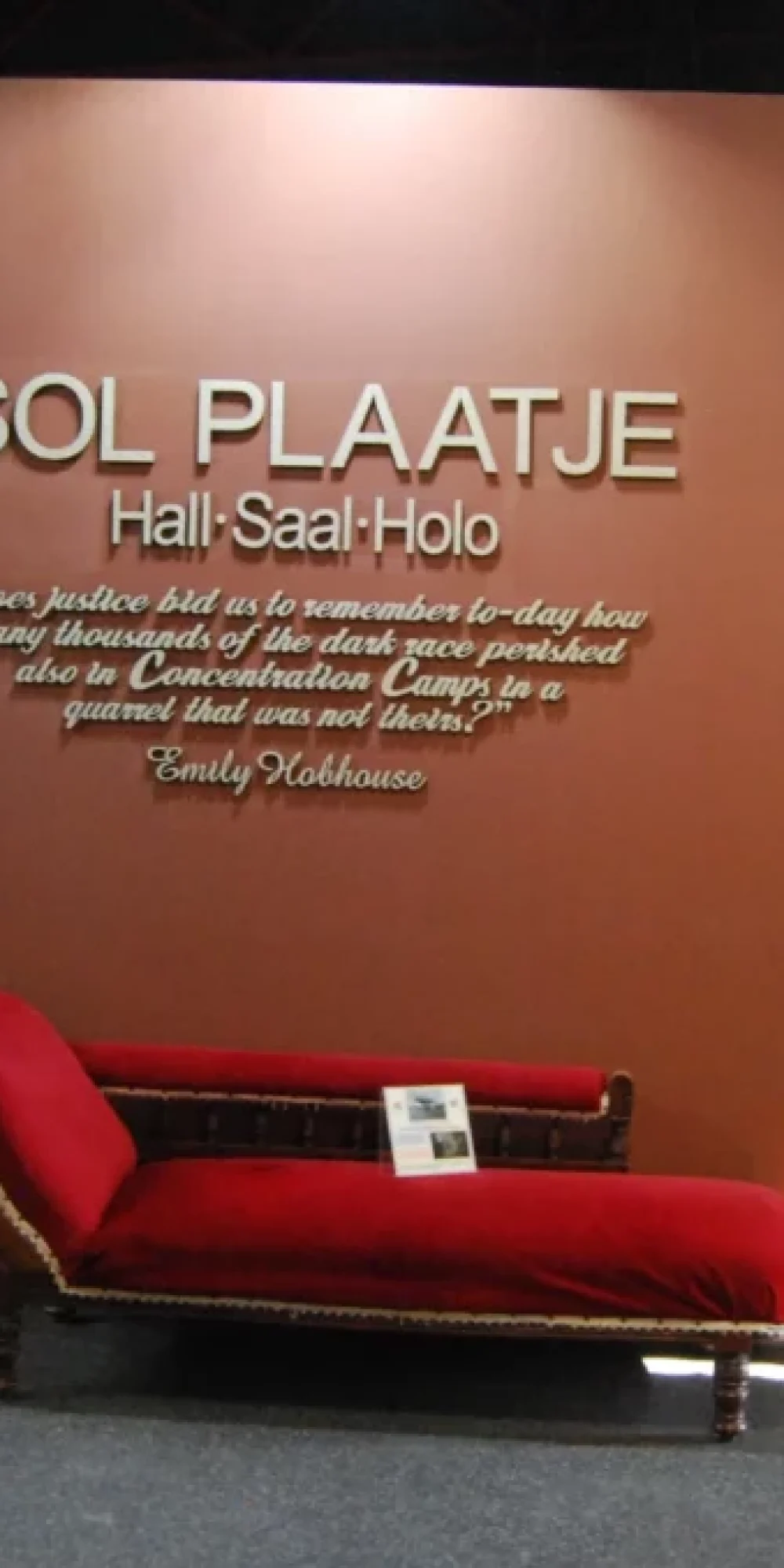
This hall is devoted to the black and colored individuals who served in a variety of roles during the conflict on both the British and Boer sides. Black people were housed in labor camps and black concentration camps in enormous numbers as a result of the scorched earth techniques, which completely destroyed farms. Over 24,000 people lost their lives in these camps.
Sol Plaatje was a member of a group of black intellectuals who experienced firsthand the Anglo-Boer War and the difficult times after the war. Together with men like John Jabavu, he became one of the founding members of the South African Native National Congress (SANNC) in 1912.
The Sol Plaatje Hall depicts the role of black people on both the Boer and the British sides. The war affected all those trapped in the war zone. Therefore the belief that it was only a 'white man's war' is untrue. Black, Coloured, and Indian people were involved in various capacities. Agterryers who supported the Boers were in charge of logistical support on commando and were also wagon drivers. Eventually, they were armed on a limited scale.




 A time spent introducing VR to both industry and state organisations across South and Southern Africa, working through the ten CSIR Divisions. This was also a time of musing and reflection, looking at how could VR, impact on education, training and learning, and especially so in Africa. Delving into this was truly innovative at the time, with acknowledgement also being given to the inputs of Dr RS Day, then of the CSIR Meraka Institute.