
Explore the Model: Click and drag the 3D model to rotate it. Move your mouse left or right to spin it horizontally, and up or down to change the vertical angle.
Zoom In/Out: Use your mouse scroll wheel or pinch on touch devices to zoom in for close-up details or zoom out for a full view.
Pan the View: Hold down the right mouse button (or use two fingers on touch devices) and drag to move the view around without rotating the model.
Reset View: If you want to reset the model to its original position, simply click the “Reset View” button below the viewer.
Full Screen Mode: For an immersive experience, click the “Full Screen” button to maximize the viewer. Press “Esc” to exit full screen mode.
Artwork Title: Agterryer (Attendant)
Artist: Phil Minnaar
Medium: Bronze (maquette)
Date: 2012
During the South African War, black farmworkers were employed by the Boer forces in various capacities. The most important function performed by black South Africans on commando was that of an Agterryer. The word, Agterryer, is an Afrikaans word that refers to a logistical supporter, an orderly or mounted attendant. Approximately 12 000 Agterryers accompanied the Boer forces on commando at the beginning of the war, although the number declined drastically during the guerrilla phase.
The duties of an Agterryer were mainly non-combatant including tasks such as looking after horses, collecting firewood, cooking food, washing
clothes, etc. Agterryers mainly saw to it that the horses were kept out of harm’s way during battles and skirmishes, reuniting with the commando after the fighting has ended. Due to their knowledge of the terrain, mobility and the nature of their responsibilities Agterryers often excelled in scouting and tracking.
They were also an important link between the commandos and the African rural communities, acting as translators when needed. Even though it wasn’t the norm, Agterryers assisted in carrying rifles and ammunition. This important supportive role that Agterryers performed were an integral part of the commando system at the commencement of the war. The invaluable logistical support Agterryers provided contributed to the success of
the commandos as a fighting unit. Agterryers frequently came under British fire and an unknown number were killed while serving in Boer commandos.
During the latter part of the war Agterryers generally served with the Boer forces without any renumeration whatsoever. When the war ended, many commandos still had a small number of Agterryers serving with them. They preferred loyalty to the Boers over the higher salaries paid by the British military authorities.




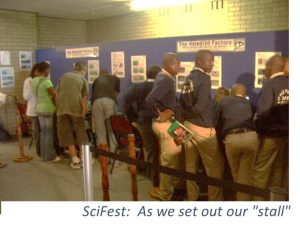
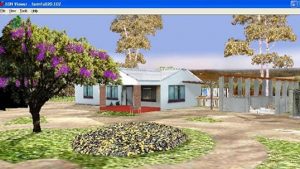

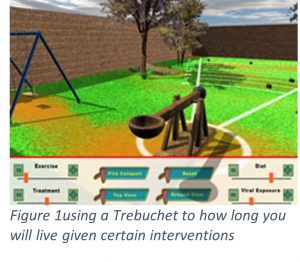


 2000: Sun City, ACT 2000 – The African Computing & Telecommunications Summit
 1998 – 2002: CSIR VR Centre


