
Explore the Model: Click and drag the 3D model to rotate it. Move your mouse left or right to spin it horizontally, and up or down to change the vertical angle.
Zoom In/Out: Use your mouse scroll wheel or pinch on touch devices to zoom in for close-up details or zoom out for a full view.
Pan the View: Hold down the right mouse button (or use two fingers on touch devices) and drag to move the view around without rotating the model.
Reset View: If you want to reset the model to its original position, simply click the “Reset View” button below the viewer.
Full Screen Mode: For an immersive experience, click the “Full Screen” button to maximize the viewer. Press “Esc” to exit full screen mode.
Sculpture: SOLOMON TSHEKISHO PLAATJE (1876-1932)
Artist: Dina Grobler
Solomon (Sol) Plaatje was born on 9 October 1876 on the farm Doornfontein near Boshof in the then Orange- Free State. Later the family moved to Pniel, Griqualand West where Plaatje was educated at the Lutheran mission station. He remained at the school as a pupil-teachervbefore leaving for Kimberley in 1894 where he took up a job as a letter carrier (telegraph messenger) for the Post Office.
Plaatje was a skilled linguist and excelled in languages at school. Plaatje became fluent in several African and European languages. Besides his mother tongue of Setswana, he also spoke English, Dutch, German, French, Sotho, Zulu, and Xhosa. He moved to Mafeking in 1898 to work as a court interpreter. In the South African War during the siege of Mafeking from 14 October 1899 to 15 February 1900 Plaatje kept a diary of day-to-day events.
After resigning as court interpreter in 1902 he started his career as journalist and became the first editor of the Koranta ea Becoana (Bechuana Gazette) in Mafeking as well as the Tsala ea Becoana (Bechuana Friend) and Tsala ea Batho (The Friend of the People) in Kimberley. As an activist and politician, Plaatje spent much of his life in the struggle for the enfranchisement and liberation of African people. He was a founder member and first General Secretary of the South African Native National Congress (SANNC) formed in 1912, which became known as the African National Congress (ANC) in 1926. Plaatje died of pneumonia at Pimville in Johannesburg on 19 June 1932. He was buried in Kimberley in the West End Cemetery.





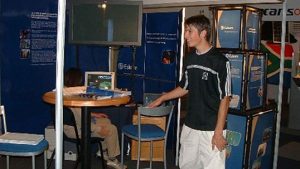


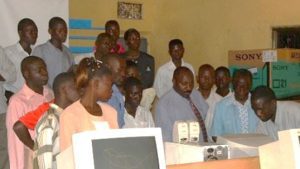
 2000: Sun City, ACT 2000 – The African Computing & Telecommunications Summit
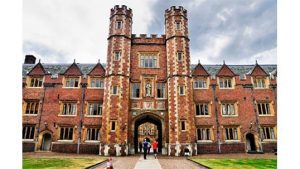
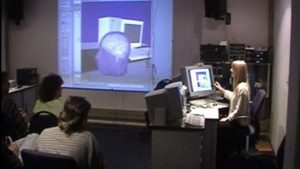 1998 – 2002: CSIR VR Centre


